


Direct Flight Multi-Flight
⚠️ PRESALE INFO – READ BEFORE ORDERING
PRESALE FOR THIS PRODUCT ENDS 3/12/26
This product is available on a two-week presale. Orders placed during this time are guaranteed to be included in our next production run. After the presale ends, you can still order, but inventory is limited to the extra quantity we purchase—and availability is not guaranteed.
If you order after the presale, your item may take longer to ship depending on remaining stock levels.
⚠️ Important Note: Pricing is subject to change due to potential tariff increases on imported materials. Locking in your order during the presale not only guarantees availability—but also protects you from possible price hikes.
To secure your spot and get your gear sooner, we strongly recommend ordering during the presale window.
WARRANTY
Structural: ONE YEAR WARRANTY
Subject to the requirements, exclusions and limitations stated below, your Bulletproof Fitness Equipment product’s structural are warranted against defects in materials and workmanship arising from normal use for one (1) year from the original purchaser (non- transferable).
Wear Guards / Consumables / Upholstery: 90 Day Warranty
Subject to the requirements, exclusions and limitations stated below, your Bulletproof Fitness Equipment product’s wear guards and upholstery is warranted against defects in materials and workmanship arising from normal use for 90 days of the original purchaser (non- transferable).
Products are made in China. We do not collect taxes, duties and customs fees for international orders.
Direct Flight Multi-Flight Attachment
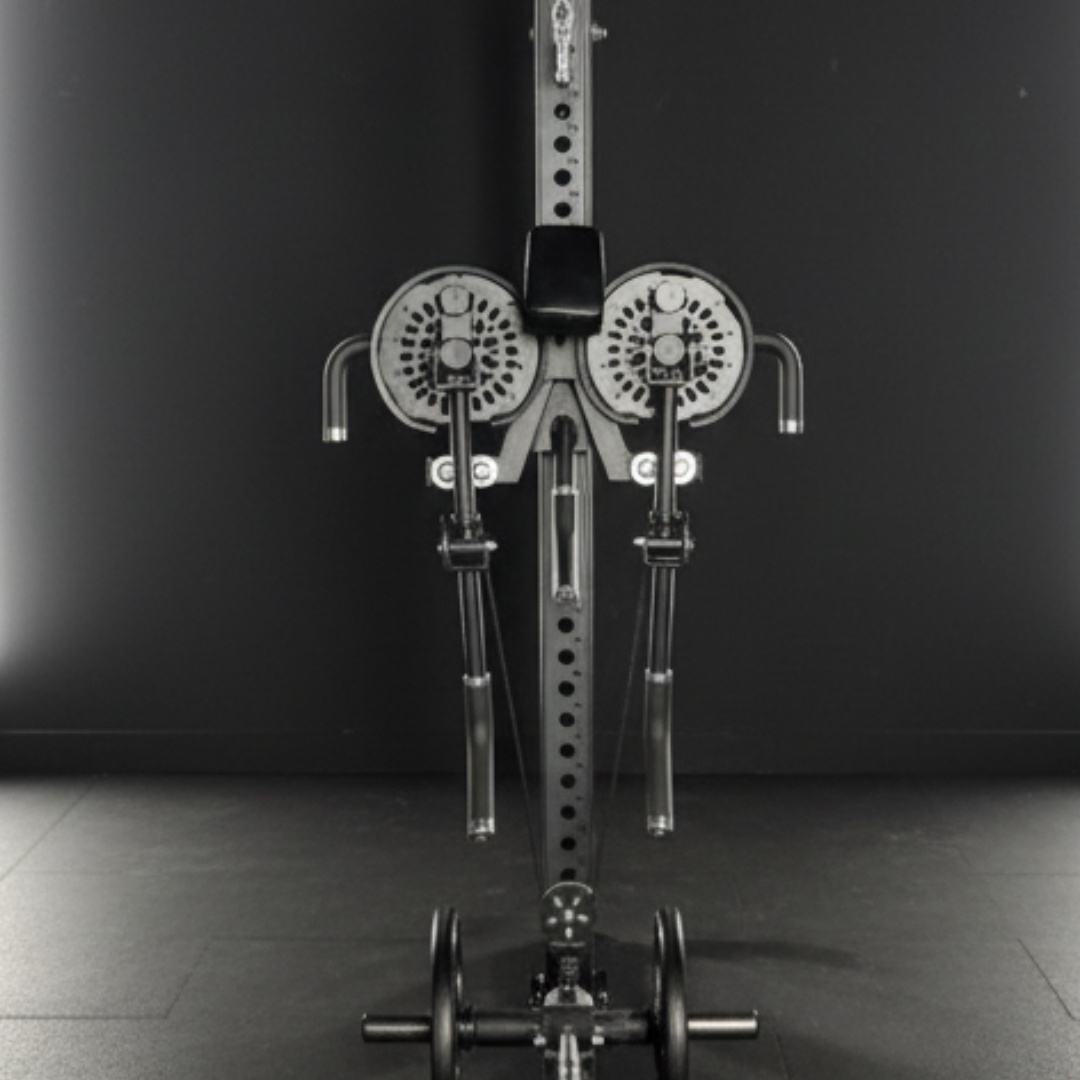
Most rack fly attachments feel like a layover. You’ll get there… eventually. Direct Flight is our answer to the gap between compact rack “attachments” and giant commercial Multi-Flight machines: dual cable cams, a consistent resistance curve, and a direct feel — without turning your gym into a machine warehouse.
Videos
Real-world setups, movement demos, and exercise variations across multiple load sources. Scroll to view.
What’s Included
- Direct Flight Multi-Flight unit with dual cable cams
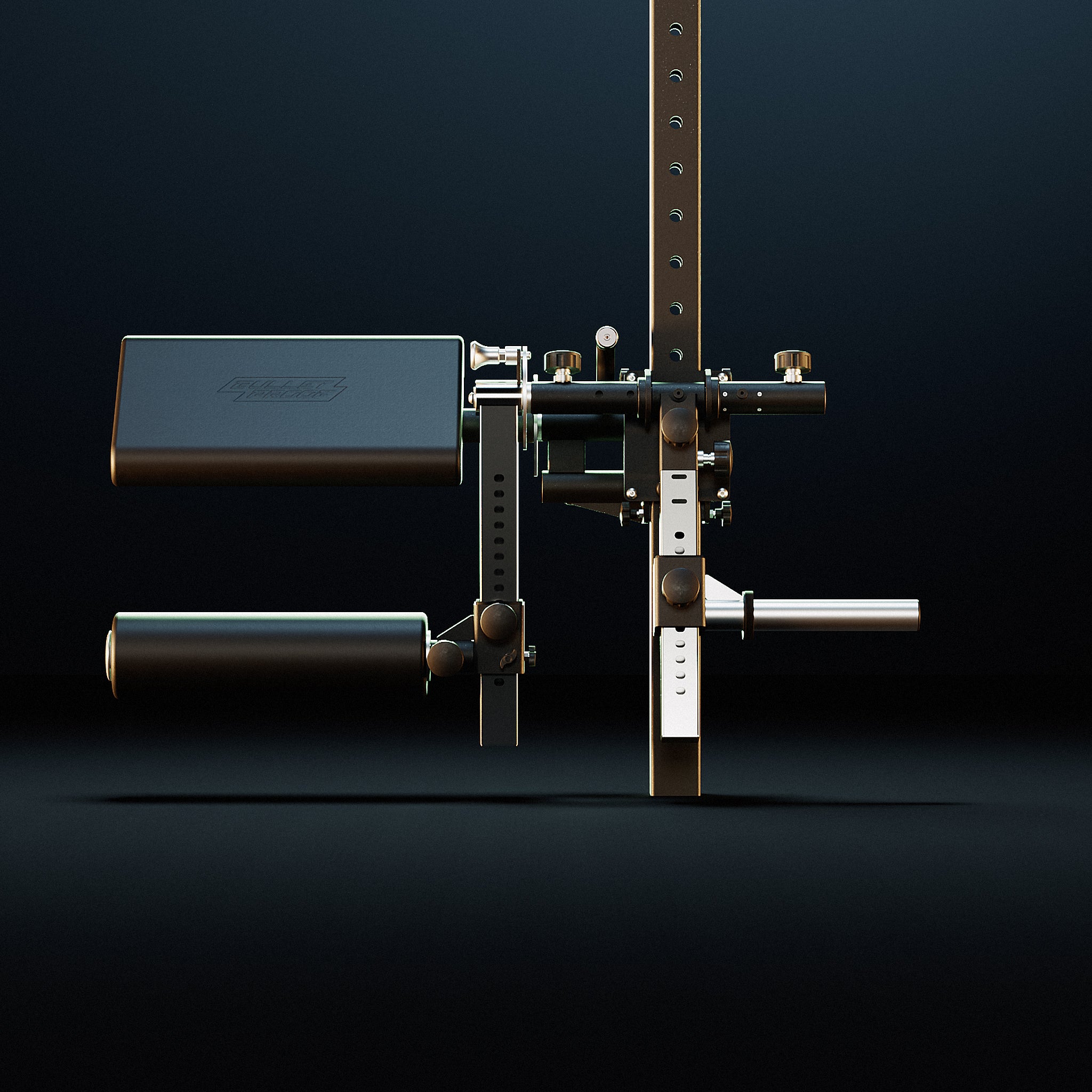
- Forehead pad for stabilized bent-over work
- Adjustable arms for Multi-Flight patterns and lateral raise setups
- Arm lock / free-move capability (lock hinge points or release for free movement)
- Integrated side handles for quick install/removal
Note: load source components (weight stack, Voltra, Ares, VTS routing, etc.) are system-dependent and sold separately.
Why Direct Flight Wins in the Real World
Cam-Driven Resistance Curve
Most rack “fly attachments” are plate-loaded levers with drop-off and inconsistent curves. Direct Flight uses dual cable cams so the profile stays strong where it should.
Direct Feel
The cable path stays clean: cable → pulley → load. Less routing = less mush = more “this feels like a real machine.”
Commercial Feel, Rack Footprint
The normal choice is: pay big money + sacrifice space… or accept a compromise. Direct Flight exists so you don’t have to pick a bad option.
Multi-Load Source
Run it off VTS, VTS with Mini Barbell, VTS Lite with Mini Barbell, functional trainer stacks, Voltra, Ares, and more. Your attachment shouldn’t become obsolete because you upgraded your rack.
Mounting
Hinge & Pin Trolley Method
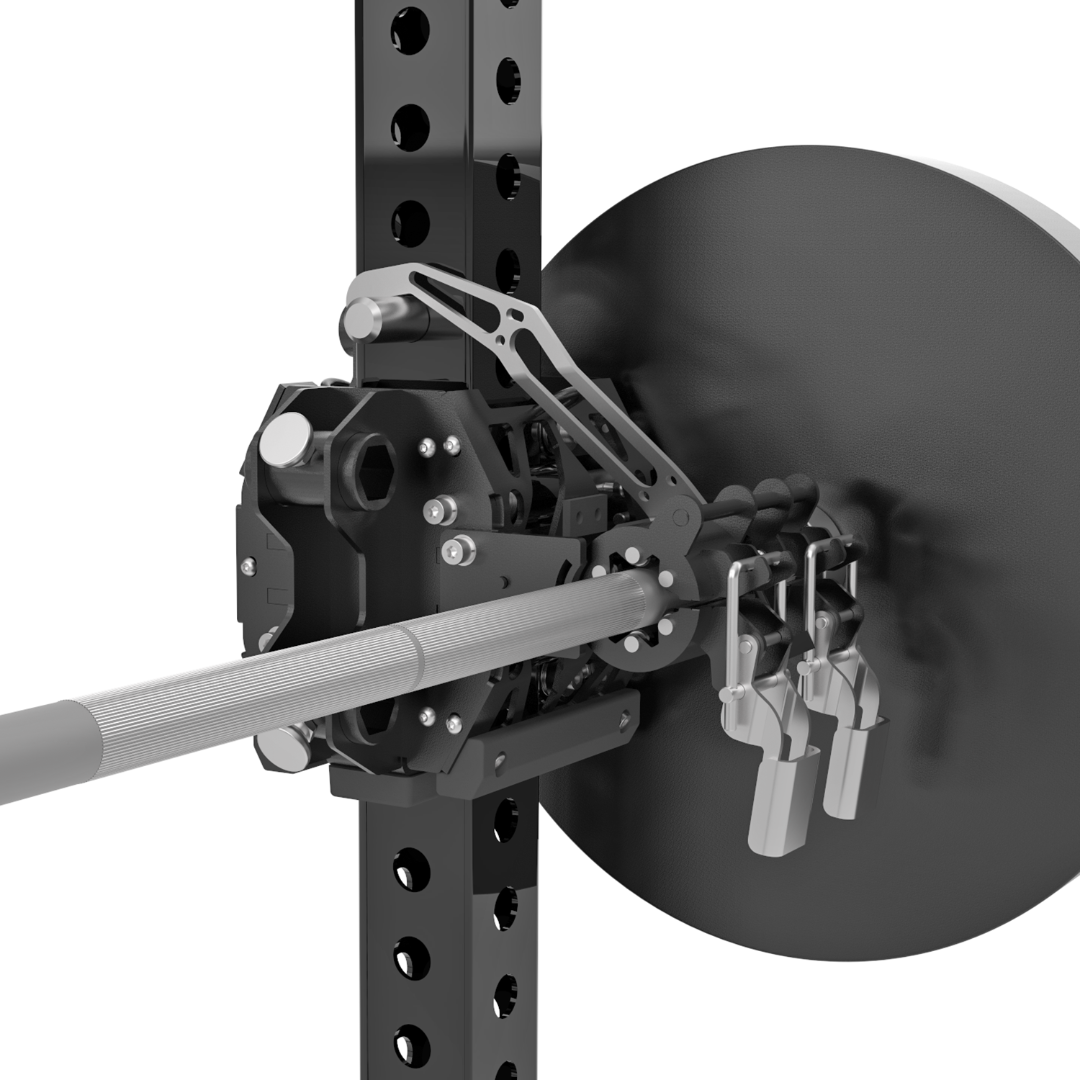
Wrap the trolley around the upright like a door hinge, slide the pin through, and you’re locked in. Grab the side handles, line it up on the face of the upright, pin straight through, thumb nut on the back. Done.
Attachment Convenience
Leave it on an upright for a dedicated station, or pull it off when you want the rack space back. Commercial feel without permanent real estate theft.
Compatibility
Features
Fixed or Free Arm Motion
Lock the hinge points for a rigid plane — or pull the pin and release them for freely moving arms. Fixed when you want it. Free when you want it.
Forehead Pad Stability
Bent-over lateral raises and rear delt work shouldn’t require circus balance. The forehead pad gives you a stable point so you can actually isolate what you’re training.
Multi-Flight + Lateral Raise Setups
Configure pec/rear delt Multi-Flight patterns, or set up standing lateral raise mechanics. One unit. Multiple “this is what I bought it for” movements.
Quick On / Quick Off
Built-in handles + pin-through mounting means you’ll actually use it. If it’s annoying to set up, it becomes decoration. We don’t do decoration.
Specs
Core
- Drive: Dual cable cams
- Resistance Path: Direct (minimal routing)
- Arm Mode: Lockable hinge points (fixed) or free movement
- Stability: Forehead pad for bent-over work
Integration
- Mounting: Rack-face attachment via hinge & pin trolley method
- Load Sources: VTS, rack functional trainers, REP Ares, Voltra and more
- Connection: Carabiner / side mount pulley / floating pulley methods
🏢 Built to Commercial Biomechanics Standards
Before we talk numbers, this is important:
The arm length, cam dimensions, and cable behavior of the Multi-Flight are modeled directly off high-end commercial fly machines. We trained on, tested, and studied multiple standalone pec fly and rear delt units and modeled ours after the ones that felt best.
- Not scaled down
- Not compromised
- Not “lighter by design”
It’s built to replicate commercial machine biomechanics — in a modular format.
🔎 Measured Felt Load (Two-Arm Use)
Because this is a modular system, we tested it with a fish scale to give you real data. With 90 lb loaded on the trolley, the handle registered ~40 lb of force.
Loaded weight × 0.44 ≈ felt load (two arms together)
Exact numbers vary slightly depending on arm position and angle.
- 150 lb loaded → ~66 lb felt
- 200 lb loaded → ~88 lb felt
- 225 lb loaded → ~99 lb felt
🔁 Isolateral Use
If you hold one arm stationary and move the other: the floating pulley redistributes tension and felt load drops further than two-arm use.
This is normal for floating pulley systems and not unique to this unit. Stronger pec fly users should plan their setup accordingly.
🟥 Important: REP Ares (2:1 System)
The Ares already runs at 2:1 (you feel roughly half the stack). If you combine Ares reduction (½) + Multi-Flight reduction (~0.44), you land around:
This is not a flaw — it’s compounded ratios.
Recommendation: If you’re strong in pec fly, we recommend using a Gym Pin so you can add plates to the stack and reach appropriate resistance.
🟦 Voltra Users
Depending on your strength level, you may need to terminate the line, use a floating pulley, or increase effective resistance. This is simply adjusting for leverage — the same way commercial machines rely on heavy stacks.
🟨 VTS / Plate-Loaded Trolley Users
If side-mounting with a single trolley, you may need a longer weight horn — especially for stronger pec fly users. Commercial fly machines typically include 200–220 lb stacks for this reason.
🧠 Why We’re Explaining This
Standalone commercial machines don’t disclose effective felt load. They just include a heavy stack and let you add weight until it’s challenging.
Because the Multi-Flight is modular — and can connect to systems with different ratios — we’re choosing to provide transparency so you can configure your setup correctly. The dimensions and geometry match commercial units. We’re just giving you the math they don’t.
Measurements
Multi-Flight Unit
- Width (handles out to the side): ~66"
- Length (handles straight down): ~38"
- Distance off front of rack: ~11"
- Handle length: ~25"
- Width (handles straight down): ~29"
- Weight: ~45 lbs
Measurements are approximate.
Trolley
- Rack to end of weight horns (each side): ~14"
- Weight horn usable loading length: ~8"
- Distance off back of rack: ~4"
Measurements are approximate.
Measurement Images


Comparisons
The Bottom Line
Direct Flight is designed to feel like the “big machine” option — without the big machine footprint. If your gym has a rack, you’ve already got the foundation.
FAQ
Can the arms be fixed, or do they always move?
You can lock the hinge points for a fixed plane, or pull the pin to let them move freely. Fixed when you want it. Free when you want it.
Will it work with Beyond Power Voltra / REP Ares?
Yes. The floating pulley + carabiner approach allows clean integration with multiple cable/load systems, including Voltra and Ares.
What’s the footprint off the rack?
The Multi-Flight unit sits about ~11" off the front of the rack. The trolley sits about ~4" off the back, and the horns extend to about ~14" from the rack.
Direct Flight Logic
A Multi-Flight should feel like a Multi-Flight. Not a compromise. Not a space tax.
Direct Flight exists so your rack can do what the big machines do.
This product has no reviews yet.